Maintenance Practice
Why New Lift Ropes Fail Early: Sheave Groove Wear
In brief Fitting new ropes into worn sheave grooves is the classic false economy in lift maintenance: uneven groove depths load ropes unequally, worn profiles concentrate pressure on fewer wires, and degraded undercuts change the traction the system was designed for. The result is premature wear of an expensive new set. Grooves should be gauged at every rope survey, and regrooved or the sheave replaced before — or with — the new ropes.
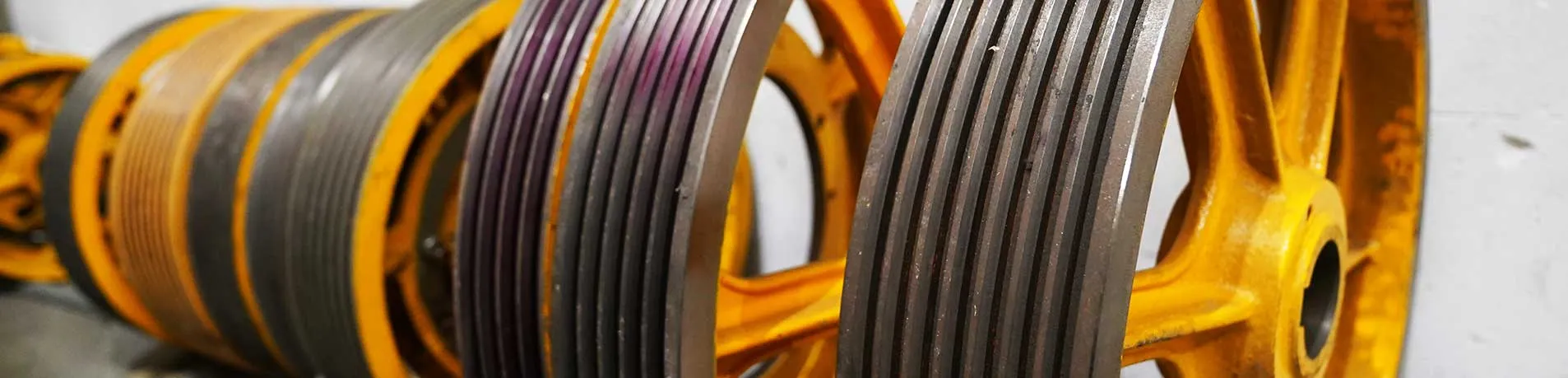
Here is the call nobody enjoys: a lift re-roped barely two years ago is showing broken wires and diameter loss again. The ropes were certified, the fitting was competent. The problem was never the ropes — it was what they were fitted into. Worn grooves consume new ropes with astonishing efficiency, and the money spent on the set is quietly written off from the day it is installed.
Traction is a partnership
A traction lift transmits all of its drive — up, down, accelerating, braking — through friction between the suspension ropes and the traction sheave grooves. The groove profile is engineered geometry, not just a slot:
- U-grooves with undercut — the undercut narrows the seat so the rope bears on two flanks, raising contact pressure and therefore grip. The undercut angle is a design value: too little and traction suffers, too much and rope pressure climbs toward the damaging.
- V-grooves — grip through wedging action, highest pressure, used where duty suits.
- Round-seat (U) grooves — gentlest on rope, used on diverters and double-wrap arrangements where grip comes from wrap angle instead.
Every start and stop involves a whisper of relative movement between rope and groove. Multiply by millions of cycles and the groove — deliberately made of softer material than the rope wire — wears. That sacrificial relationship is by design; the sheave protects the rope until, worn far enough, it starts destroying it.
How grooves go bad
Unevenly, first of all. No multi-rope set shares load perfectly, so no sheave wears its grooves identically. Groove depths diverge; each rope then travels a slightly different effective circumference per revolution. The deeper-seated ropes are dragged into creep against their neighbours — more micro-slip, more wear, faster divergence. Uneven groove wear is self-accelerating, and it also defeats tension equalisation: balanced tonight, unequal by next month, because the geometry forces it.
Profile distortion, second. The groove bottom wears to the print of the old rope’s worn diameter and lay. Flanks polish and bell-mouth. Undercuts lose their engineered edges — reducing contact pressure and with it the traction margin the installation was certified with.
Imprinting, worst. A heavily worn rope running long enough leaves strand-pattern corrugation in the groove — a negative mould of the old rope. The groove now is the old rope, in iron.
What worn grooves do to a new set
Put a fresh set — round, full-diameter, precisely equal — into those grooves:
- Unequal seating from day one. Different groove depths mean unequal effective diameters: some ropes permanently overloaded, doing the set’s work and fatiguing at multiples of the design rate.
- Concentrated contact. A new rope’s crown wires bear on a profile worn to a different shape — pressure lands on fewer wires. Crown-wire wear and the first broken wires arrive years early.
- Imprint milling. Corrugated grooves work the new rope’s surface every revolution — the old set, from beyond the skip, machining its replacement.
- Traction drift. Worn undercuts change grip. Marginal traction shows up as scuffing under braking — which is yet more groove and rope wear.
A significant share of “premature rope failure” investigations end at the groove gauge. The set didn’t fail; it was sentenced at installation.
The decision: run, regroove or replace
Groove gauging tells you which of three roads you are on:
- Within tolerance — fit the ropes, record the profile as baseline, carry on.
- Worn but machinable — regroove: the sheave (and diverters, which wear too and are routinely forgotten) machined back to true, matched profile and correct undercut. The economics are rarely close — machining costs a fraction of the rope set it protects.
- Beyond machining — not enough rim remains to restore profile at a safe depth: replacement sheave, supplied and fitted, ideally in the same programme as the ropes.
The sequencing matters: grooves first, then ropes — or both in one planned visit. Regrooving after new ropes have run in worn grooves means buying wear twice.
One survey, whole system
This is why a Re-Ropes survey never looks at ropes alone. Ropes, grooves, diverters, tensions, terminations — one tribological system, assessed together, so the quotation covers what the installation actually needs and the new set delivers the life you paid for. It is also why we will sometimes tell you not to buy ropes yet, and to machine a sheave instead: the method is survey, supply, fit, guarantee — in that order, and the guarantee depends on the survey being honest.
New ropes wearing suspiciously fast — or planning a re-rope and want the grooves checked first? Book the survey; the groove gauge settles it in an afternoon.
Frequently asked questions
How do I know if a sheave needs regrooving?
The tell-tales: ropes riding at visibly different heights across the sheave, polished or bell-mouthed groove flanks, rope imprinting in the groove bottom, rapid wear on recently fitted ropes, and tensions that will not stay equal after balancing. Confirmation is by gauging — a groove gauge or profile measurement against the specified radius and undercut — which is part of every Re-Ropes survey.
Can all sheaves be regrooved?
No — regrooving removes material, so it needs enough rim left to restore a true profile and correct undercut at a still-safe groove depth, and rim thickness below the groove must remain adequate. A sheave can typically be machined once or twice in its life. Beyond that, or where cracks and hardness problems appear, replacement is the honest recommendation.
Should sheaves be machined every time ropes are replaced?
They should be assessed every time — machined only when measurements justify it. Light, even wear within tolerance can run on. The discipline that matters is gauging grooves before quoting the re-rope, so the decision is made on measurements rather than discovered through the new set wearing out in a couple of years.
Why do ropes and grooves wear each other?
Traction lifts work by friction: rope pressed into groove, torque transmitted through that contact. Every start, stop and levelling adjustment involves micro-creep between rope and groove — steel sliding on iron under pressure. Over millions of cycles the softer groove material wears to fit the rope, then keeps wearing unevenly. It is one tribological system; that is why we survey it as one.